04/17/26
French man, 86, issues historic apology for family’s role in transatlantic slavery
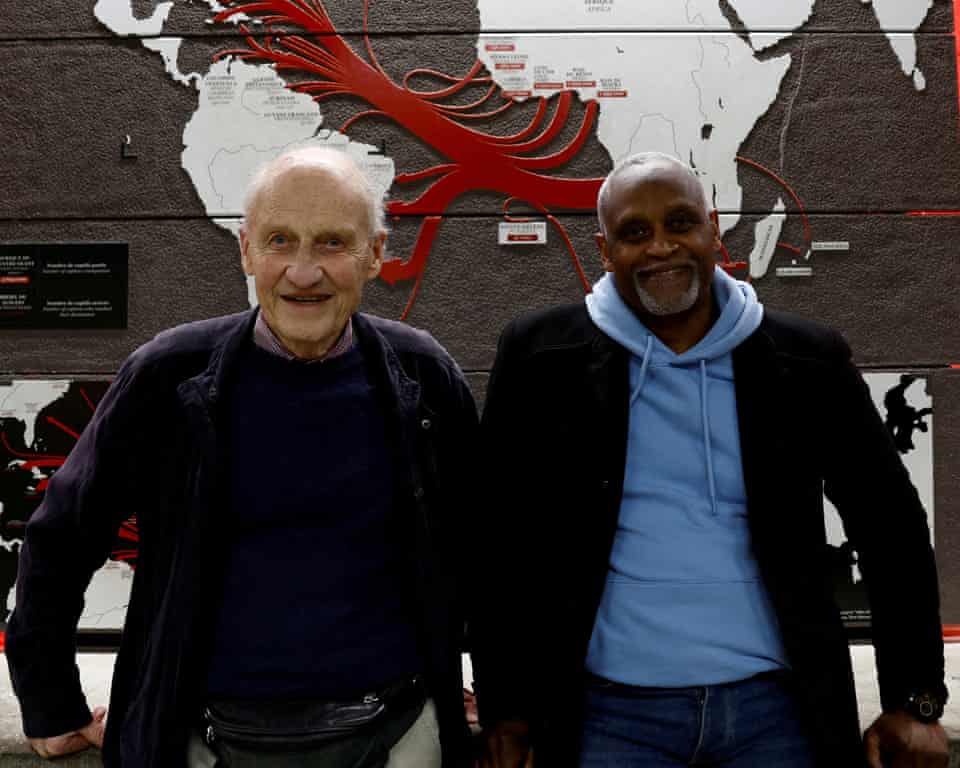
Pierre Guillon de Prince believed to be first in France to formally apologise for ancestors’ connections to slavery
An 86-year-old man has issued what is believed to be the first formal apology by someone in France for their family’s role in transatlantic slavery.
Pierre Guillon de Prince’s ancestors were shipowners based in Nantes, the country’s largest port for transatlantic slavery. They transported about 4,500 enslaved Africans and owned plantations in the Caribbean.
Guillon de Prince said on Saturday that other French families must confront their historical allegiances to slavery and the state should go beyond symbolic gestures to address the past, including through reparations.
He said: “Faced with the rise of racism in our society, I felt a responsibility not to let this past be erased.”
Guillon de Prince made the apology at a gathering in Nantes before the inauguration of an 18-metre replica ship mast, alongside Dieudonné Boutrin, a descendant of enslaved people from the Caribbean island of Martinique.

The two work together at the Coque Nomade Fraternité, an association dedicated to “breaking the silence” around slavery, and said the mast would serve as a “beacon of humanity”.
Boutrin, 61, said: “Many families of descendants of slave traders don’t dare speak out for fear of reopening old wounds and anger. Pierre’s apology is a courageous act.”
From the 15th to the 19th century, at least 12.5 million Africans were abducted and forcibly transported, mostly on European ships. France trafficked an estimated 1.3 million people.
France recognised transatlantic slavery as a crime against humanity in 2001 but, like most European countries, has never formally apologised for its role.
During his terms in office, President Emmanuel Macron has expanded access to archives on France’s colonial past. Last year he said he would establish a commission to examine France’s history with Haiti without mentioning reparations.
France abstained at the UN in March from a resolution proposed by Ghana declaring slavery the “gravest crime against humanity” and calling for reparations.