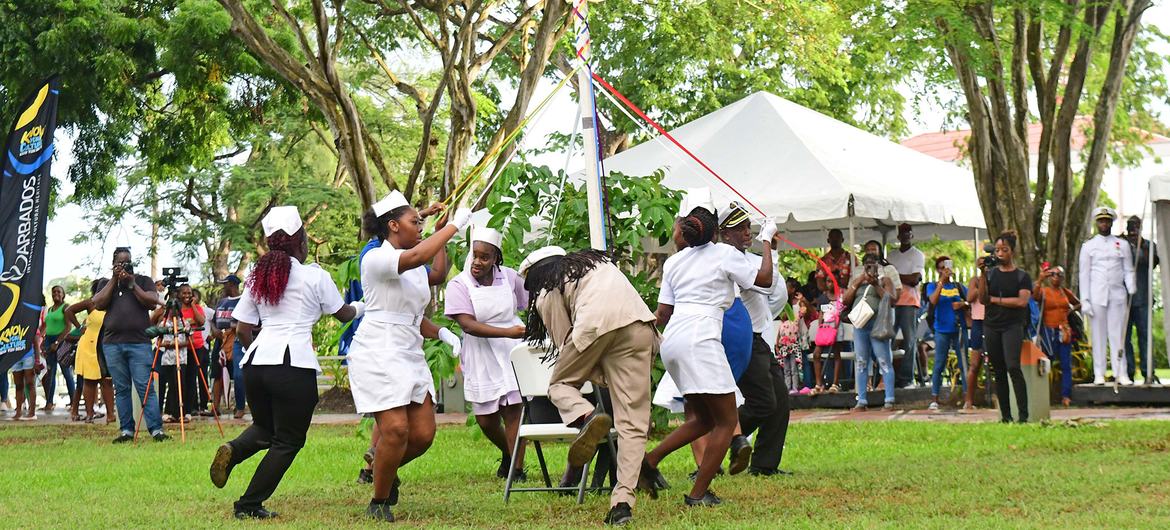
From salt made by hand on a Philippine island, to ceremonial dances in Kenya and ancient textile traditions in Belarus, the UN cultural agency has added a diverse range of living traditions to its global lists of culture at risk, highlighting both the richness of expression and the urgent need to safeguard heritage.
Unlike monuments or historic sites, “intangible cultural heritage” refers to living practices – traditions, skills, rituals, music, crafts and social customs that communities pass on from one generation to the next.
Through its lists, the UN Education, Scientific and Cultural Organization (UNESCO) works with governments and communities to promote these traditions, strengthen transmission and mobilise support to ensure their survival, particularly where they are threatened by social, economic or environmental change.
Yes. They come up with different things each year. The Compas music genre joins the two food items from Haiti that have been added over the years.
The dish that celebrates freedom and independence, Soup Joumou, was added before. That represents the culture as much as anything, anything else is a bonus
The list ends up being a great global commercial that promotes parts of culture, so it's always great to learn about things created and developed by other people.